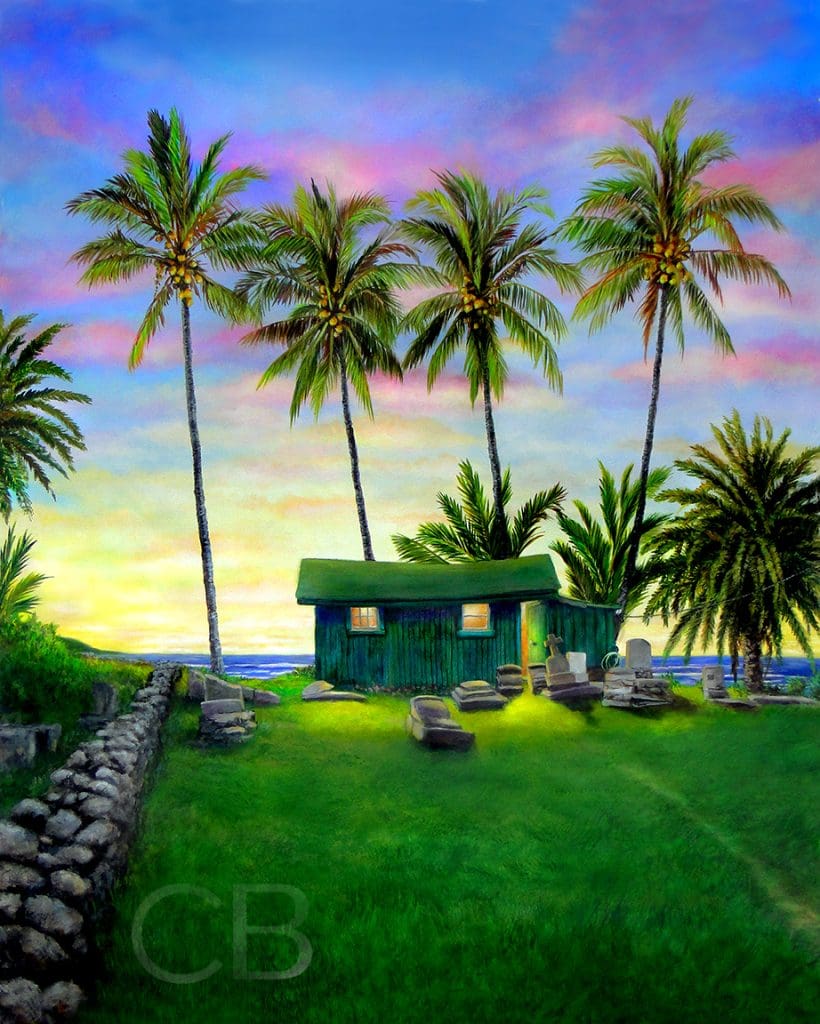
If only houses could talk. Auntie Gertie had a penchant for boisterous parties. Living with the ravages of Hansen’s disease the residents of Kalaupapa live in a unique, protected community on a remote peninsula jutting out from the tallest sea cliffs in the world on Moloka’i in Hawaii. The painting shows her house with it’s graves in the yard at sunset and a cheerful light emanating from the windows, celebrating the depth of the human spirit in life and death.
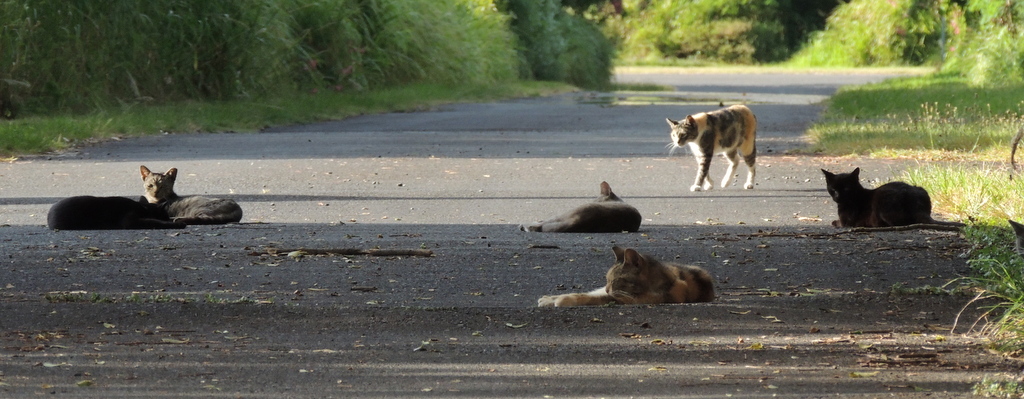
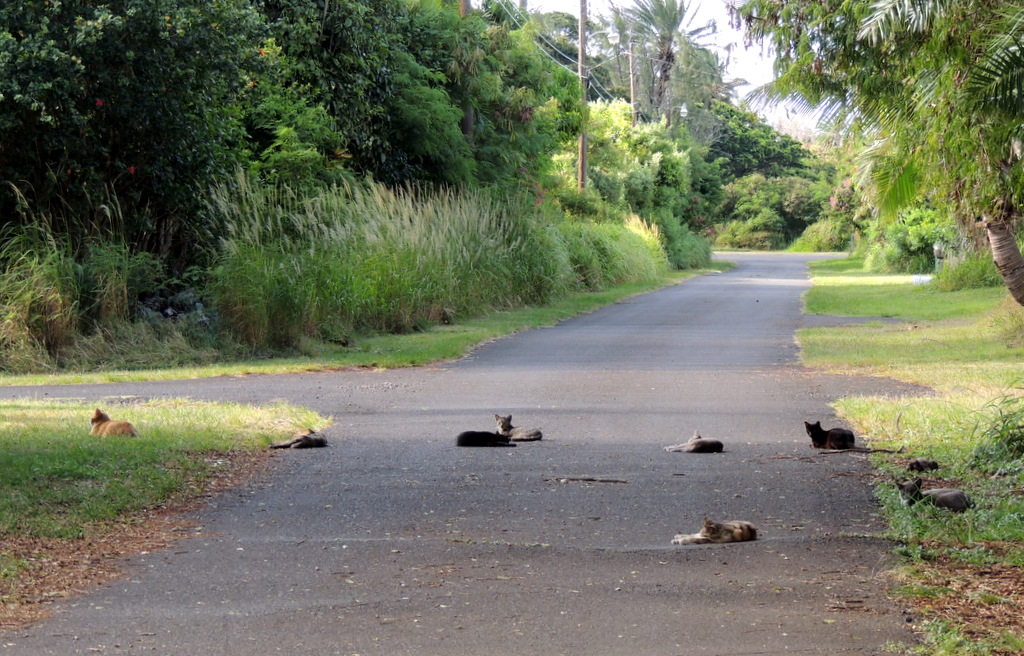
Every afternoon at the same time Auntie Gertie climbed in her rusty old pick-up to drive to familiar street corners where of stray cats lounged around waiting for her to feed them.
Everyone new to stay off the road during Auntie’s forays. She used the grassy edges of the road to determine when she left the pavement, because even though she was fully blind, the cats depended on her. The former Leprosy colony started as a place of exile where lawlessness and cruelty reigned. Eventually, Catholic priests and nuns built hospitals, schools and churches. Other denominations followed and a number of historic churches remain. Humanity redefined the settlement, Hansen’s disease survivors won the right to stay and the residents lived by their own set of gentle rules, allowing a blind woman to drive on public roads to feed her cats.
To this day cats are still regularly fed and wait patiently on the intersections where Auntie Gertie used to find them.