

A contemporary painting of Molokai’s ancient fishponds (loko iʻa) bridges past and present, capturing the enduring spirit of Hawaiian aquaculture. Coral and basalt stone walls draw graceful lines through the turquoise waters of the Pacific, looking like lace from above. A visual homage to cultural reclamation, honoring the community’s ongoing efforts to restore these vital, centuries-old food systems.
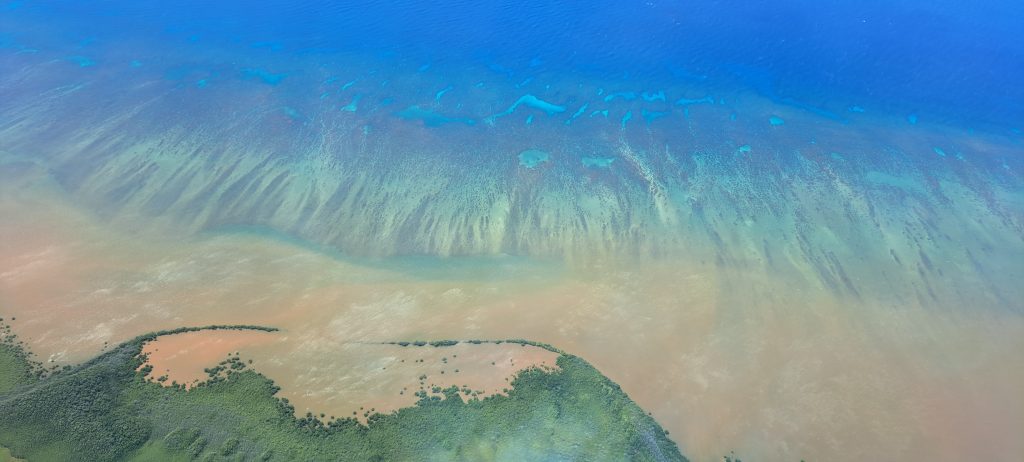
Moloka’i, often called Moloka’i Nui A Hina, was the epicenter of this innovation, once boasting over 60 operating fishponds along its southern coastline. Today, a powerful contemporary movement is revitalizing these ancient structures, transitioning them from historic relics into living laboratories for climate resilience, community food sovereignty, and cultural reclamation. Grassroots organizations and local kiaʻi loko (fishpond guardians) are rebuilding the stone walls (kuapā) not just to harvest fish, but to restore native ecosystems, combat invasive species, and teach the next generation the foundational Hawaiian principle of ʻāina momona (fertile, abundant land) in a rapidly changing world. As seen from the air along Molokai’s southern coast. The water is red from run off after heavy rains.

Please write to clbnyart@gmail.com for prices and information about commissions,
I personally answer all inquiries and look forward to hearing from you.