
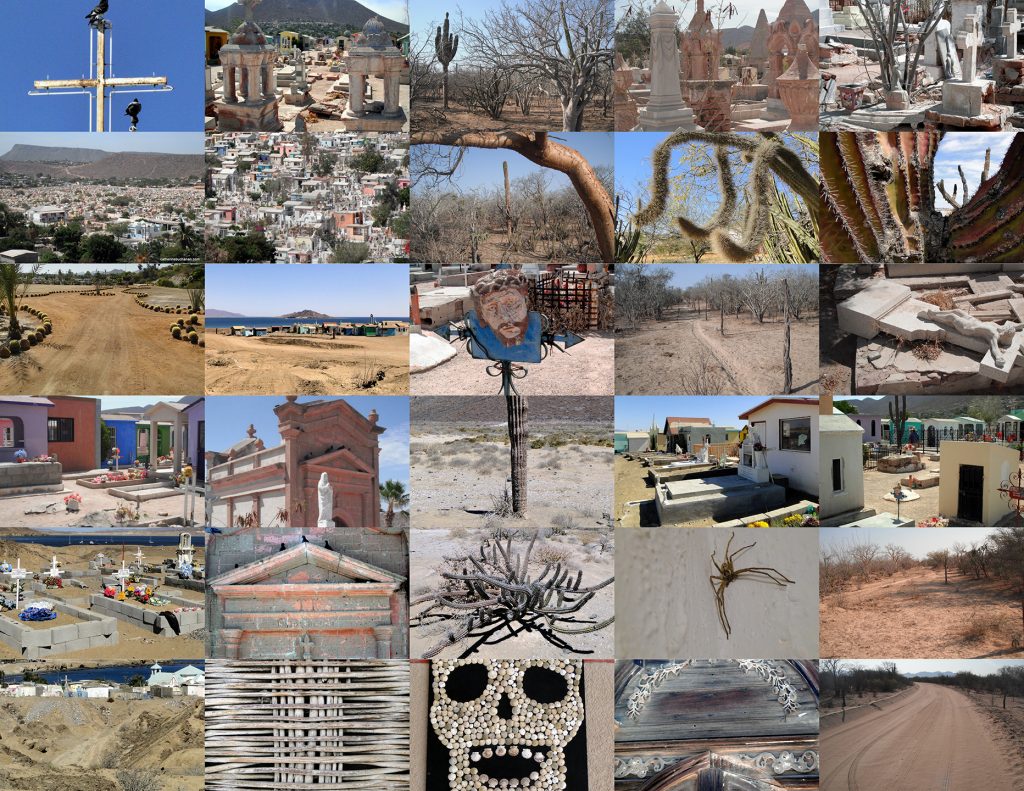
Panteón de San Juan, the oldest and largest cemetery in La Paz, is not on tourist maps. The dearly departed lie undisturbed in a quiet neighborhood in the back of town in a breathlessly hot valley surrounded by jagged dessert mountains. I set out with friends on foot to climb a long set of stairs for a view of the city. When we reached to top, in the valley below, there appeared to be acres of tiny homes in disrepair. Although, the miniature city is final resting place for the dead.
The crypts ascend in age and the number of children’s graves speak to a harsh life. Some family lines must have vanished as many crypts and grave markers are worn and broken. The craftsmanship changed as we walked further. The more recent crypts revealed the gradual death of artistry as well. The clean lines of cement and cinder block had gradually replaced sculpted stone and carved wood. Bright, happy colors gave none of the somber feelings cemeteries often inspire, a reminder that life is a celebration.
We stood in the shade of a dusty, gnarled tree to escape the midday sun, which was hot enough to support spontaneous human combustion. Even artificial flowers appeared dry and wilted. The patina of dust reduced the oldest structures to monochromatic brown earth, as if the need to stratify between rich and poor turned into a waste of time after all.

I keep a file of paintings that have been lost, stolen, painted over or given away for a variety of reasons. There’s more than 80 paintings in the file, which speaks to some difficult passages in life. I have much empathy for struggling artists. The paintings I did while living in La Paz I had to leave behind and was never able to retrieve them. Among them were these six little paintings. Adiós, cactusito.
